Argentine Empanadas: Fillings, Folds, and Where to Find the Best Ones in Buenos Aires
If asado is Argentina's great communal ritual, empanadas are its everyday comfort. They show up everywhere — at the start of an asado, in a paper bag at a street kiosk, at family Sunday lunches, at the football. No special occasion required.
They are also deceptively complex. The filling, the fold, the dough, the cooking method — all of it varies by region, by family, and by the type of occasion. Here is how to make sense of them.
What Is an Empanada?
An empanada is a stuffed pastry. The word comes from empanar — to bread or coat. In Argentina, they are half-moon shaped, sealed with a crimped edge called a repulgue, and either baked or fried.
The dough can be flaky (for baked empanadas) or slightly chewier (for fried ones). The filling can be almost anything, though beef is the default.
Classic Argentine Empanada Fillings
Carne (Beef)
The standard. Minced or chopped beef cooked with onion, paprika, cumin, and hard-boiled egg. Sometimes olives and raisins, depending on the region. The beef should be moist, not dry — a well-made carne empanada has filling that still releases a little juice when you bite in.
The eggs and olives are not decoration. They add texture and flavour, and their presence signals that whoever made these followed the proper recipe.
Carne Picante (Spicy Beef)
Same as the carne filling but with more chilli or cayenne. In Argentina, picante is relative — it adds warmth rather than fire. Worth trying if you like a little more heat.
Pollo (Chicken)
Shredded chicken with onion, capsicum, and spices. A lighter option that works well baked. Often has a slightly different spice profile than the beef version, leaning sweeter.
Jamón y Queso (Ham and Cheese)
Simple and reliable. Melted cheese with ham, sometimes with a little onion or green pepper. Popular with children and anyone who wants something straightforward. Baked versions are best.
Humita (Creamed Corn)
A vegetarian option with deep roots in indigenous Argentine and Andean cooking. Creamed corn with onion, sometimes capsicum. Sweet, soft, and completely different in character from the meat fillings. Common in the northern provinces.
Verdura (Spinach and Cheese)
Another vegetarian standard. Wilted spinach with white cheese, sometimes hard-boiled egg. Good baked, often better fried.
Caprese (Tomato, Basil, Mozzarella)
A more modern filling found in Buenos Aires bakeries and restaurants. Not traditional but very popular, especially baked.
Regional Differences: Not All Empanadas Are the Same
Argentina is a big country and empanadas change significantly as you move around it.
Buenos Aires: Baked by default, milder spicing, often with beef that is finely minced rather than chopped. The repulgue (crimp) is functional rather than elaborate.
Salta (Northern Argentina): Smaller, always baked, with beef that is more finely chopped than minced, more cumin, and cooked with potato added to the filling. Empanadas salteñas are considered by many Argentines to be the finest in the country.
Tucumán: Known for moist beef filling with a specific spice blend. The rivalry between Salta and Tucumán over whose empanadas are better is a genuine ongoing national debate.
Mendoza: Often include more potato in the filling and are baked.
Patagonia: Lamb empanadas appear in the south, taking advantage of the region's exceptional sheep. Less common but worth seeking out if you visit.
How to Read the Fold
In many restaurants and bakeries, the crimp pattern on the top of an empanada indicates the filling. There is no universal standard — each place sets its own system — but it is common to ask when you order:
- Repulgue cerrado (sealed fold): Standard beef
- Repulgue con punta (pointed ends): Spicy beef
- No repulgue (smooth edge): Ham and cheese or vegetarian
At a proper asado, the host often marks one corner of different empanadas — a small indentation, a different number of crimps — to help guests identify fillings. Worth asking.
Empanadas at an Asado
Empanadas typically open the asado as the fire is still building and the larger cuts of meat are just going on. They are the bridge between arriving and eating — something to eat with your first glass of wine while you watch the grill come to life.
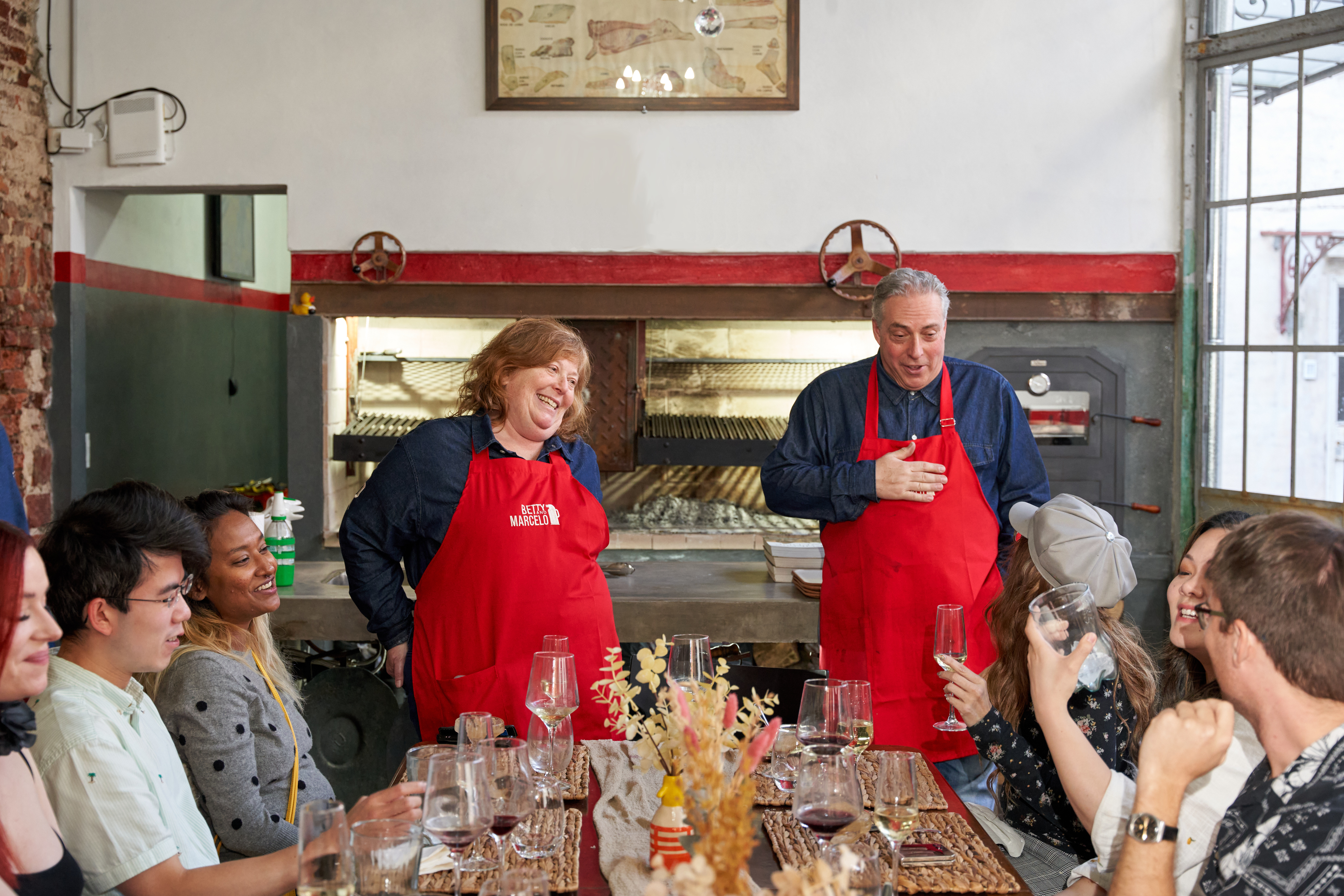
At Betty and Marcelo's asado, fresh meat empanadas come out first, alongside the welcome drink. They are made the same day and baked rather than fried. It is one of the moments guests remember most because the empanadas arrive warm and the fire is just beginning to glow and the evening is still ahead.
Where to Find Good Empanadas in Buenos Aires
El Federal (San Telmo) — a classic neighbourhood café with excellent baked empanadas and an old Buenos Aires atmosphere.
La Cocina (Palermo) — consistently ranked among the best empanadas in the city, particularly the carne and humita.
El Sanjuanino (Recoleta) — authentic northern-style empanadas in Buenos Aires. One of the better places to try empanadas salteñas outside the north.
Any neighbourhood bakery (panadería) — often overlooked by visitors, local panaderías bake empanadas through the lunch hours and they are usually excellent. Look for a queue of locals.
FAQ: Argentine Empanadas
Are Argentine empanadas baked or fried?
Both exist, but baked is more common in Buenos Aires. Fried empanadas have a richer, crispier crust and are more common in the northern provinces. Neither is more authentic than the other — it depends on the region and the occasion.
What is the difference between Argentine and Chilean or Colombian empanadas?
Argentine empanadas are generally larger, have a flakier baked dough, and use a broader range of fillings. Chilean empanadas are typically baked with a softer dough and a simpler beef filling. Colombian empanadas are smaller, often fried, and made with corn dough rather than wheat.
Can I make empanadas at home?
Yes. The dough is straightforward and pre-made empanada discs (tapas de empanada) are available at most supermarkets if you want to skip that step. The filling takes about 20 minutes to prepare. Bake at 200°C for 20-25 minutes until golden.
Are empanadas eaten as a main course or a starter?
Both. At an asado they are an opening course. As street food or a quick lunch, they are a complete meal — three or four is a normal portion. In homes, they can be dinner on their own.
What do you drink with empanadas?
At an asado, whatever wine is open. A crisp Torrontés or a light Malbec both work well. For casual eating, a cold Quilmes (Argentine lager) is the most common pairing.