Argentine Asado vs American BBQ: What Makes Them Different
Two countries, two obsessions with fire and meat, two completely different approaches. Argentine asado and American BBQ are both national institutions, sources of fierce regional pride, and the subject of endless debate. But despite sharing a love for grilled meat, they're fundamentally different traditions.
Having cooked Argentine asado for decades and hosted guests from all over the world (many of them seasoned American BBQ enthusiasts), we've had this conversation hundreds of times. Here's the definitive breakdown of what makes each tradition unique.
The Fundamental Philosophy
Argentine Asado: The Fire Is Everything
In Argentina, the relationship is between the cook and the fire. The asador (grillmaster) builds a wood fire, creates embers, and manages heat with almost obsessive precision. There's no thermometer, no timer, no gadget. It's decades of experience, instinct, and respect for the process.
The asado philosophy is simplicity. Premium beef, salt, fire, time. Argentines believe great meat doesn't need elaborate seasoning or sauce. The flavor comes from the quality of the grass-fed beef and the skill of managing the fire.
American BBQ: Low and Slow Is King
American BBQ is built around the smoker. The art is in controlling temperature and smoke over many hours, transforming tough cuts into tender, flavor-soaked masterpieces. Rubs, marinades, and sauces are central to the tradition.
The BBQ philosophy is transformation. Take a tough, inexpensive cut (brisket, ribs, pork shoulder) and use time, smoke, and seasoning to create something extraordinary.
Cooking Method
How Asado Works
- Heat source: Wood or charcoal embers (never gas, never direct flame)
- Equipment: Parrilla (flat grill grate) positioned over embers
- Temperature: Medium heat, adjusted by moving embers closer or further from the grate
- Cooking time: 1-3 hours depending on the cut
- Key technique: Building and managing the ember bed, controlling heat zones
- Smoke: Incidental, not the focus. The flavor comes from embers and beef fat dripping onto coals
The asador builds a fire to one side of the parrilla, creates embers, and shovels them under the grill grate as needed. Heat management is done by hand, by feel. The meat cooks over radiant heat from the embers, not direct flame.
How American BBQ Works
- Heat source: Wood logs, charcoal, or a combination
- Equipment: Smoker (offset, pellet, drum, or pit)
- Temperature: Low and slow (225-275F / 107-135C for most cooks)
- Cooking time: 4-18 hours depending on the cut
- Key technique: Maintaining consistent temperature and smoke for hours
- Smoke: Central to the flavor. Wood choice (hickory, mesquite, oak, cherry) is critical
American BBQ is fundamentally about indirect heat and smoke. The meat is never directly over the fire. Instead, hot smoke circulates around it in a closed chamber, slowly cooking and infusing flavor over many hours.
The Cuts
Argentine Asado Cuts
Argentina uses different butchery than the US, with cuts you won't find at an American butcher:
- Chorizo - Fresh pork sausage (not the Spanish dried variety)
- Morcilla - Blood sausage, a traditional starter
- Matambrito - Thin pork belly, quick-grilled
- Colita de cuadril - Tri-tip, a signature Argentine cut
- Ojo de bife - Ribeye, the premium cut
- Vacío - Flank steak with a fat cap
- Tira de asado - Short ribs cut across the bone
- Entraña - Skirt steak, thin and intensely flavorful
The meat is typically grass-fed, giving it a leaner, more mineral-rich flavor than grain-fed American beef.
American BBQ Cuts
- Brisket - The king of Texas BBQ, smoked for 12-18 hours
- Pork ribs - Baby back or spare ribs, the backbone of Memphis and Kansas City BBQ
- Pork shoulder/butt - Pulled pork, smoked until it falls apart
- Chicken - Whole or parts, often with dry rub or sauce
- Sausage - Hot links, especially in Texas
- Beef ribs - Massive, smoky, and increasingly popular
American BBQ favors tougher, fattier cuts that benefit from long smoking. The collagen breaks down over hours, creating the signature tender, pull-apart texture.
Seasoning and Sauces
Argentine Approach: Salt and Chimichurri
Argentine asado uses minimal seasoning. The standard is:
- Coarse salt (sal gruesa) - Applied before grilling
- Chimichurri - Fresh parsley, garlic, oregano, vinegar, and olive oil, served on the side
- Salsa criolla - Diced onion, tomato, and pepper in vinegar
That's it. No rubs, no marinades, no glaze. The belief is that quality grass-fed beef, properly cooked over embers, needs nothing more. The chimichurri and salsa criolla are condiments, not marinades. They're added at the table, not during cooking.
American Approach: Rubs, Smoke, and Sauce
American BBQ is a universe of flavor layers:
- Dry rubs - Complex spice blends applied hours before cooking (paprika, brown sugar, garlic, cumin, chili powder, black pepper)
- Marinades - Some traditions marinate overnight
- Wood smoke - The flavor of hickory, mesquite, or cherry wood permeates the meat
- BBQ sauce - Tomato-based (Kansas City), vinegar-based (Carolina), mustard-based (South Carolina), or no sauce at all (Texas)
Each region has its own orthodoxy, and debates about sauce vs. no sauce can get heated.
The Social Experience
Asado: A Sacred Ritual
In Argentina, asado is Argentina's most important social tradition. Every Sunday, families gather around the grill. It's how birthdays are celebrated, friendships are deepened, and generations connect.
The asador holds a position of honor. There's one person at the grill, and everyone else socializes, drinks wine, and waits. The meal unfolds over hours, with cuts served in a specific progression from lighter to heavier. Argentine Malbec flows throughout.
Asado is never rushed. The slow pace is the point. It's a ritual of togetherness.
BBQ: Competition and Community
American BBQ has a strong competition culture. BBQ competitions draw thousands of teams across the country, with strict categories, blind judging, and serious prize money. This competitive spirit drives innovation and regional pride.
BBQ is also deeply communal. Church cookouts, tailgates, backyard parties, and the great American BBQ joint are all expressions of the same tradition. Beer is the standard drink pairing.
Which Is Better?
Neither. They're both extraordinary expressions of what humans can do with fire and meat. But they serve different purposes:
Choose asado if you want:
- Pure, clean beef flavor with minimal seasoning
- A social ritual centered around fire and wine
- A front-row seat to the cooking process
- The experience of how South Americans celebrate together
Choose American BBQ if you want:
- Complex, layered flavors from smoke and spice
- The transformation of tough cuts into tender masterpieces
- Regional diversity and endless variation
- A competitive, innovation-driven food culture
Experience Authentic Argentine Asado in Buenos Aires
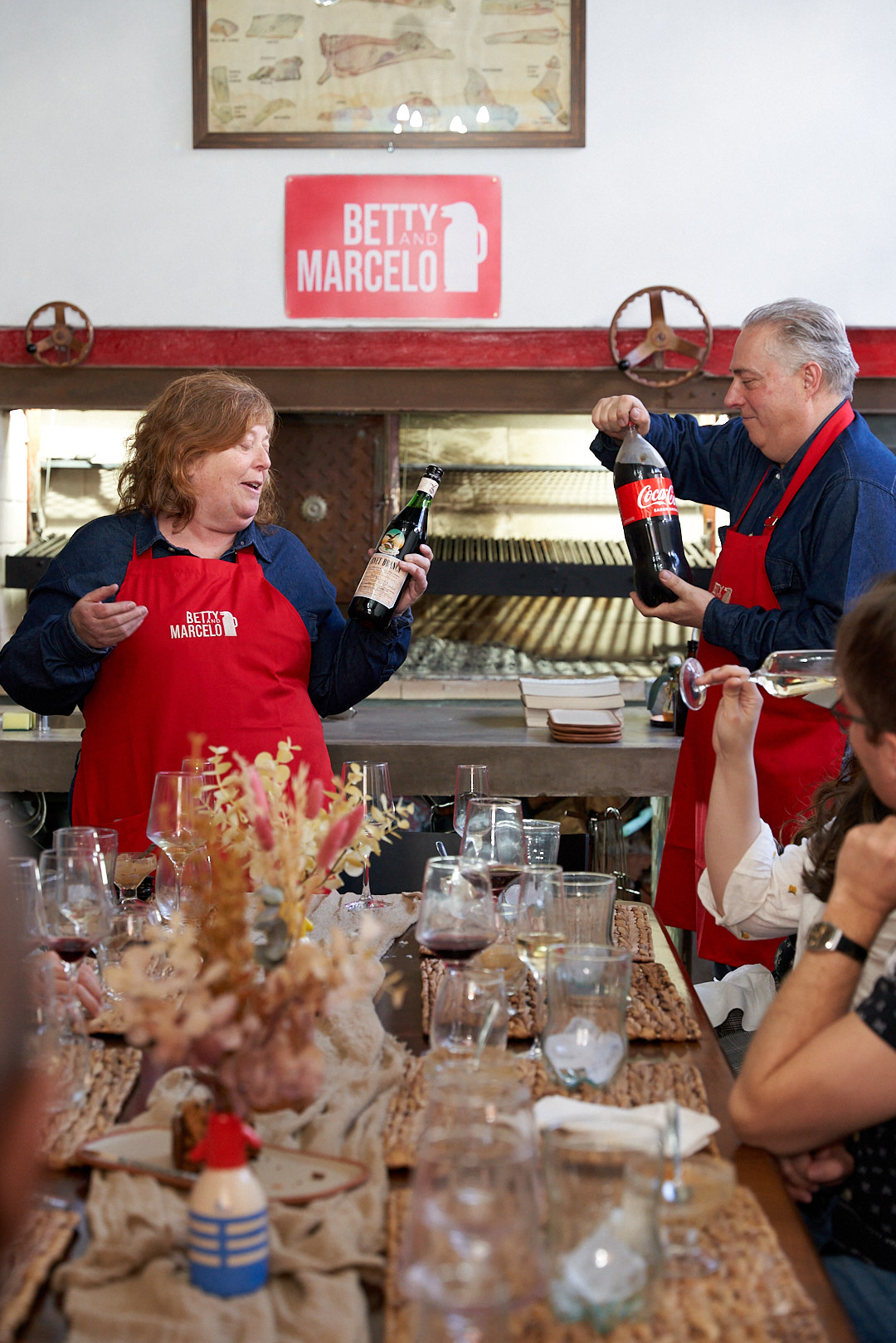
If you're visiting Buenos Aires and want to understand what makes asado different from anything you've experienced back home, join us at our Palermo Soho workshop. Marcelo, our grillmaster, has spent decades perfecting his craft, and Betty will walk you through the cultural traditions that make asado Argentina's most important ritual.
American BBQ fans are some of our favorite guests. They arrive expecting something familiar and leave understanding why asado is its own world.
U$D 104.00 per guest - Book your asado experience →
FAQ: Argentine Asado vs American BBQ
Is Argentine beef better than American beef?
Different, not necessarily better. Argentine beef is grass-fed, giving it a leaner, more mineral-rich flavor. American beef is typically grain-fed, producing more marbling and a richer, fattier taste. Both are excellent. The cooking method matters as much as the beef itself.
Can you smoke meat Argentine-style?
Traditional asado doesn't use smoke as a primary flavoring method. The smoke that occurs is incidental from fat dripping on embers. However, some regional Argentine traditions (like Patagonian lamb) do involve slow smoking. The purist asado approach focuses on ember heat, not smoke.
What wine pairs with BBQ vs asado?
Argentine asado pairs with Malbec, the country's signature red wine. American BBQ often pairs with beer, though bold red wines (Zinfandel, Cabernet) work well with smoked meats. The acidity and fruit of Malbec cut through asado's richness beautifully.
Which takes longer - asado or BBQ?
American BBQ wins on cooking time. A brisket can take 12-18 hours. A full asado, from lighting the fire to the last cut, takes 3-4 hours. But including the social time before and after, an Argentine asado gathering can last an entire afternoon, much like an American BBQ party.
Read more: The Ultimate Guide to Asado in Buenos Aires | Authentic Chimichurri Recipe